After-hours scheduling that fits service
Most kitchens cannot shut down mid-shift. We plan around close and open times so floors can be cleaned, rinsed, and dried without disrupting the line.
Serving Fort Wayne, Indiana & surrounding areas
Mon–Fri 8am–6pm · Sat 9am–2pm
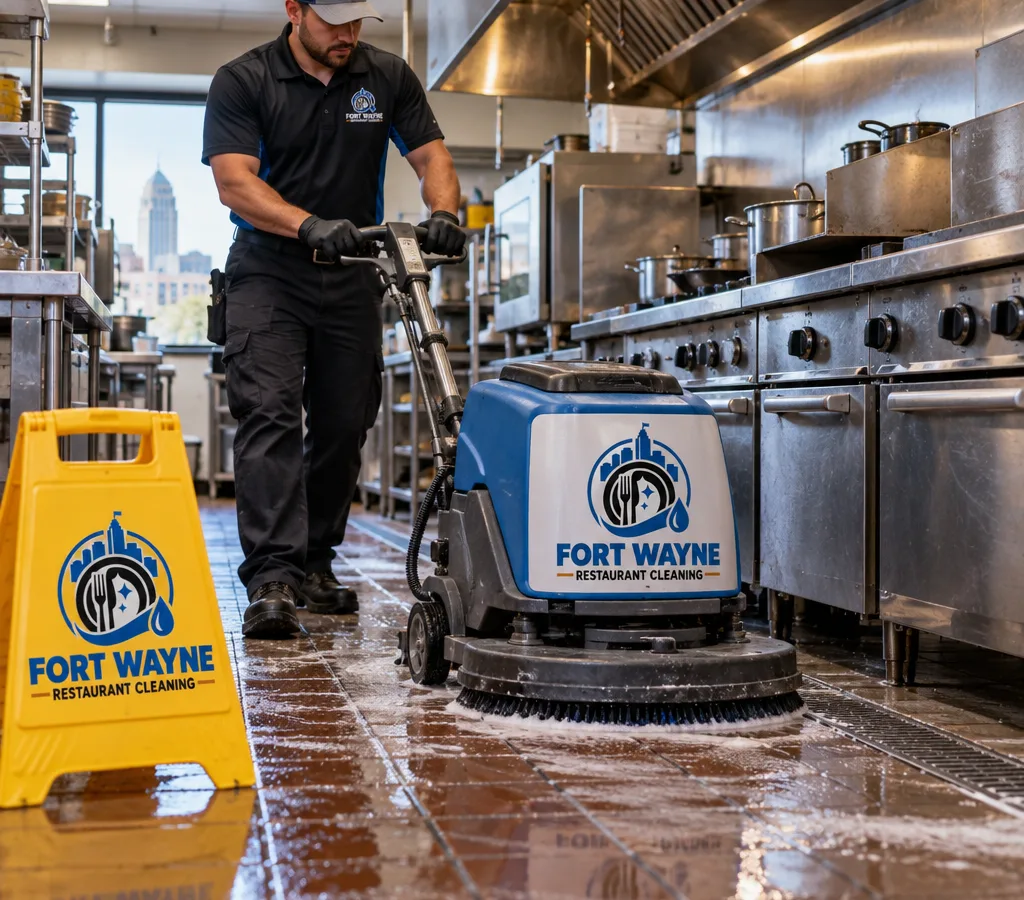
Kitchen floor cleaning in Fort Wayne
Safer footing, cleaner grout lines, and less grease buildup where inspections look first. Fort Wayne Restaurant Cleaning handles after-hours kitchen floor scrubbing and degreasing with a clear scope and consistent results.
Purposeful floor care
Commercial Kitchen Floor Cleaning is one of the simplest ways to reduce slip risk and keep your back-of-house looking and smelling like it should. In a working kitchen, oil mist, fryer spillover, tracked-in grit, and sugary syrups build up in the texture of tile and the pores of grout. A quick mop spreads that film around and leaves the corners, grout joints, and transitions behind equipment untouched.
Fort Wayne Restaurant Cleaning provides restaurant floor cleaning services for busy kitchens that need real degreasing, not just a surface wipe. We focus on the places that fail first: the cook line, dish area, beverage stations, walk paths to coolers, and the greasy edge at the base of walls and curbs. If you operate near high-traffic corridors like Coliseum Boulevard or around Downtown lunch rushes, that constant foot traffic means you need a repeatable cleaning plan, not occasional catch-up work.
If you are comparing vendors for broader restaurant cleaning services, we can coordinate kitchen floor work with your regular cleaning schedule so the floor stays manageable week to week.
Tile, grout, edges, and transitions
A kitchen floor has multiple surfaces that hold grease differently. Our work is set up to address each one:
We do not rely on fragrance or shiny residue to make the floor look clean. The goal is a thoroughly rinsed surface that is less slippery, less sticky, and easier for your staff to maintain between deep cleans.
Operational priorities
Most kitchens cannot shut down mid-shift. We plan around close and open times so floors can be cleaned, rinsed, and dried without disrupting the line.
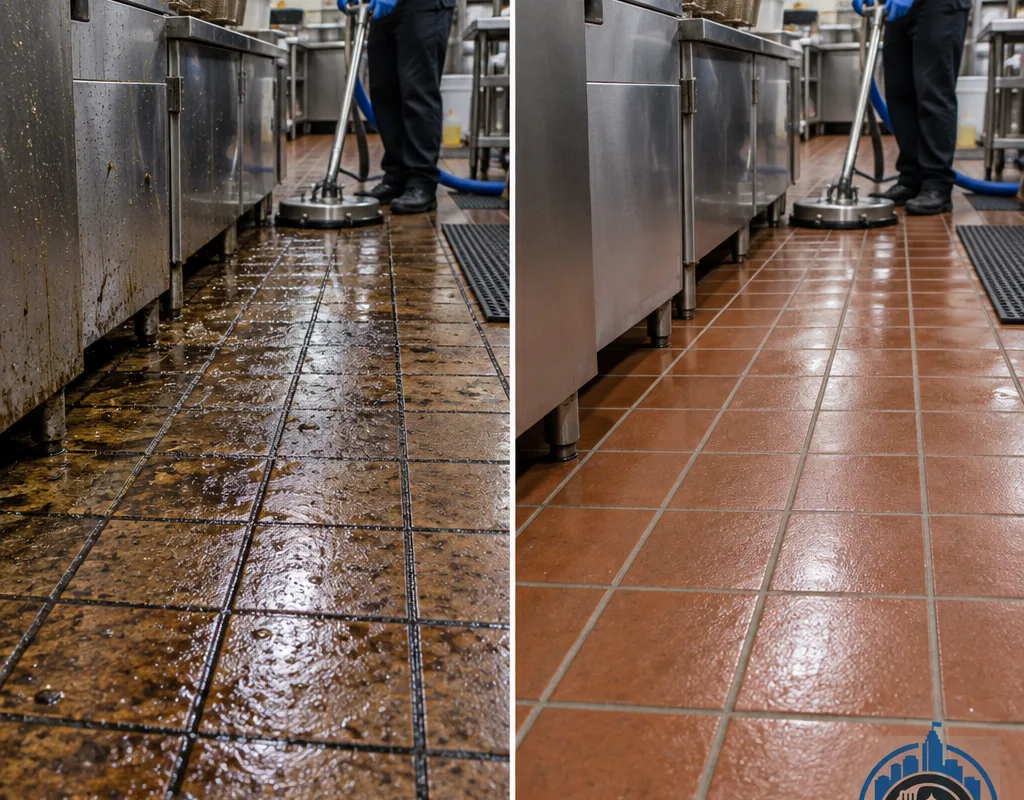
Grease film changes traction. Proper restaurant floor degreasing removes the residue that makes tile feel slick, especially near fryers and dish areas.
We define what is included: open walk areas, perimeter edges, around equipment that can be safely moved, and what requires your team to disconnect or relocate.
Restaurant grout cleaning is where results show up. If grout is loaded with grease, the whole floor reads dirty even after mopping.
Degreaser that is not fully rinsed can attract soil. We pair agitation with recovery so the floor is cleaner and easier to maintain.
If you manage more than one kitchen in the Fort Wayne area, we can standardize frequency and scope so each location looks and performs the same.
From walkthrough to dry-down
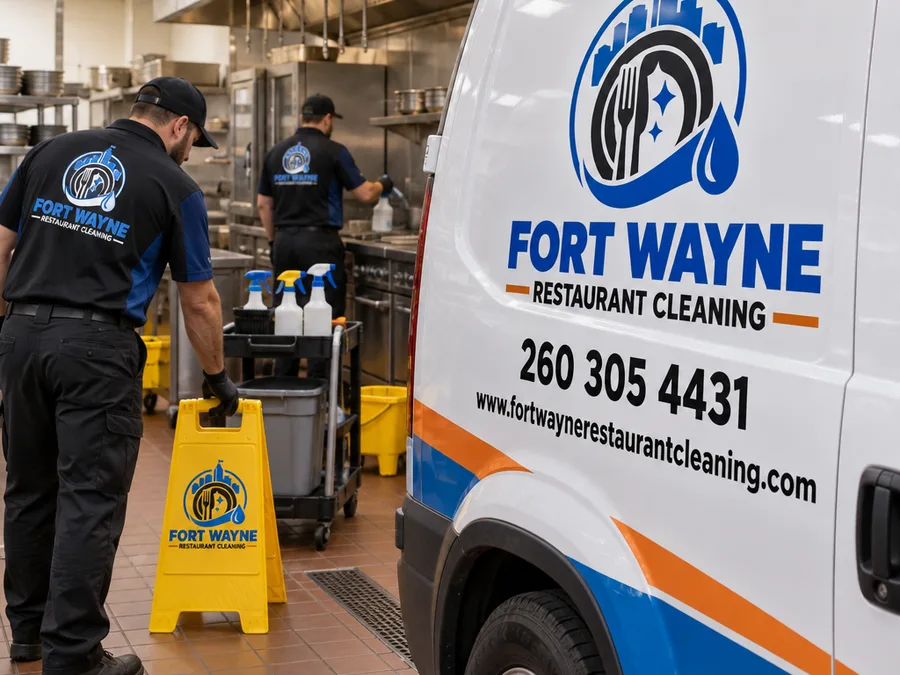
We confirm surfaces (tile type, grout condition, mats, drain locations), set wet-floor signage, and identify any areas that require equipment to be moved by your staff for safety or warranty reasons.
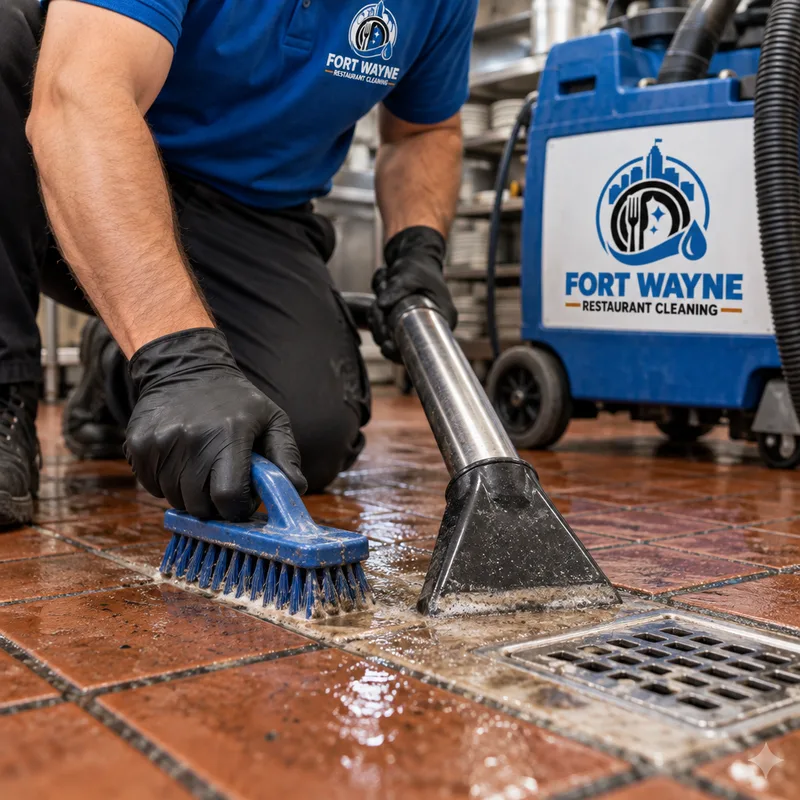
We remove loose debris and start where grease hides: base edges, corners, under mat lips, and the transition lines around the cook line and dish pit.
Kitchen floor degreasing works best when chemistry has time to break down oils. We apply the right product for food-service soil, allow dwell time, and keep the surface controlled so it does not dry out.
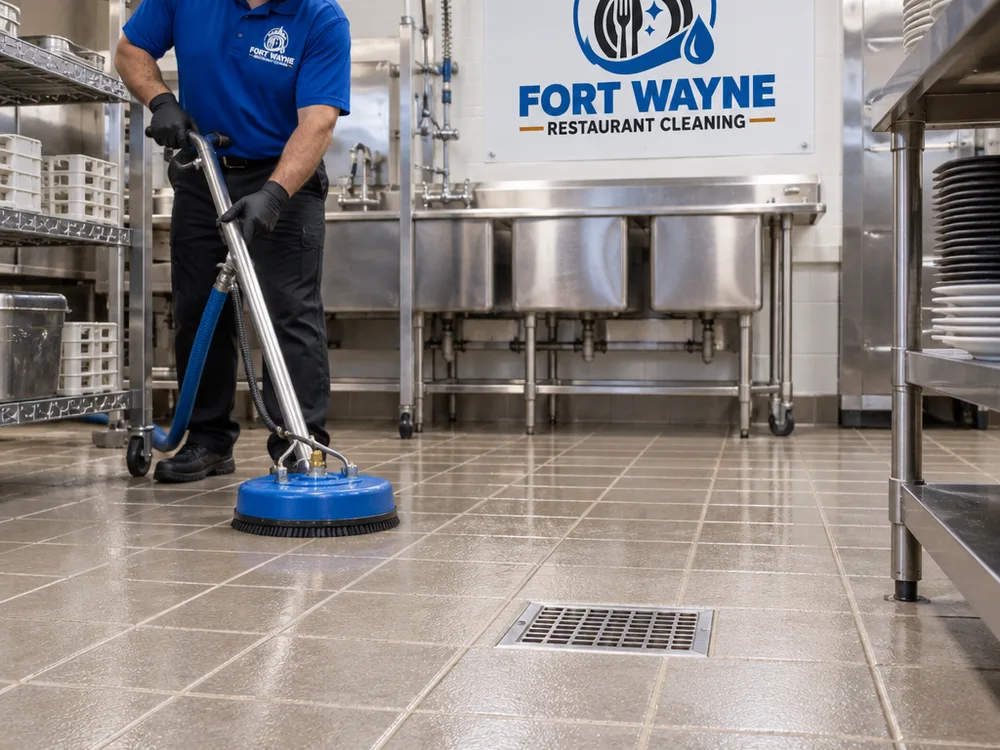
We scrub tile texture and grout joints with commercial equipment and targeted hand tools where machines cannot reach, like tight spaces between fixtures.
We rinse to remove remaining soils and chemical residue, recover the slurry, and do a final pass so the floor is ready for mats and foot traffic as soon as practical.
We reset the area (mats placed back once safe) and share simple between-service maintenance notes, like which mop chemistry helps avoid rebuilding grease film.
Planning your floor-cleaning budget
Commercial kitchen floor cleaning in Fort Wayne typically ranges from about $200 to $800+ per visit for most restaurant kitchens, depending on square footage and soil level. Smaller back-of-house areas with light buildup often price at the low end, while heavy restaurant floor degreasing at the cook line and detailed grout work can land in the higher range.
Your final price changes most with floor condition (grease thickness), tile and grout texture, how much perimeter detailing is needed, access after hours, and whether equipment must be moved. Exact pricing is confirmed after a brief walk-through so the scope matches what your kitchen actually needs.
Work in the field
Frequency, surfaces, and preparation
Most restaurants benefit from deep kitchen floor degreasing every 2 to 6 weeks, with frequency driven by fryer use, volume, and how fast the floor gets slick near the cook line. Kitchens with heavy frying or long service hours usually need more frequent visits, while lower-grease concepts can stretch the interval if daily maintenance is consistent.
Yes. Restaurant tile cleaning is adjusted to the surface texture and how it holds grease. Textured and anti-slip tiles often need more mechanical agitation and more thorough rinsing because grease sits down in the pattern where a mop cannot reach.
Often, yes. Restaurant grout cleaning can remove embedded grease and soil that makes grout look permanently dark, but the final appearance depends on grout wear, staining, and any previous coatings. We set expectations during the walk-through and focus on removing the grease load that affects slip risk and odor.
A properly degreased and thoroughly rinsed floor is usually less slippery than a grease-filmed floor. The key is removing residue: overusing degreaser without full rinse can leave a film that attracts soil. We pair scrubbing with rinse and recovery to leave a cleaner, less tacky surface.
We can work around movable items and may be able to shift light, non-connected pieces when it is safe, but anything that is hardwired, plumbed, or involves gas connections should be handled by your staff or maintenance team. We will outline what needs to be moved before service so there is no confusion on cleaning night.
We need clear access to the areas being cleaned, mats pulled if possible, and a quick confirmation of the time window for cleaning and dry-down. If there are areas you want prioritized for inspection readiness, such as the cook line perimeter or dish area drains, point those out during the walk-through.
Plan your next floor cleaning
Tell Fort Wayne Restaurant Cleaning what type of kitchen floor you have, your busiest days, and the areas that get slick first. We will put together a written scope for commercial floor cleaning in Fort Wayne and schedule it around your hours.